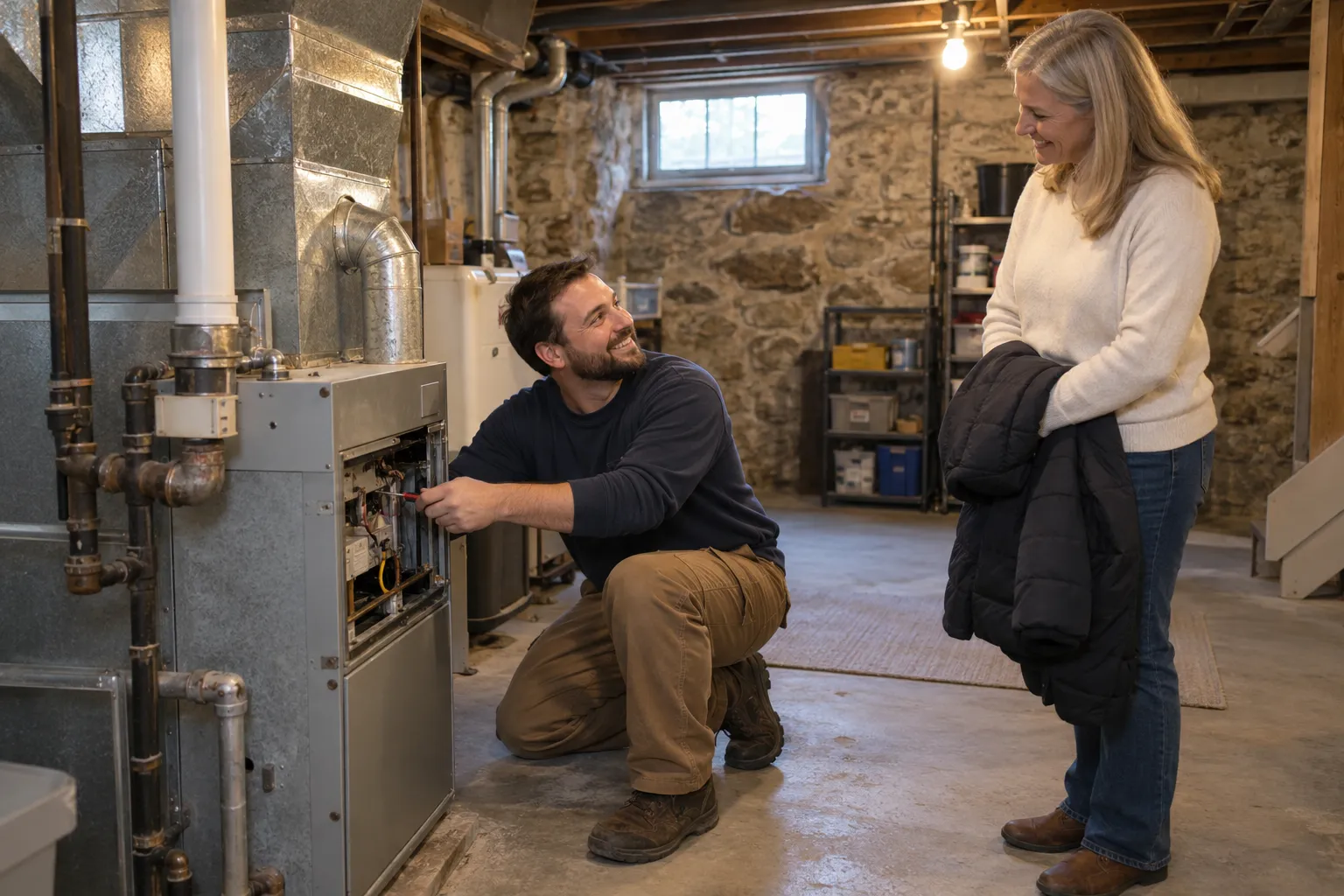
A lot of people think a furnace that stops heating is simply worn out. In practice, many failures start with a small part, like a dirty sensor, a weak igniter or a clogged filter. In older houses, the story can include past repairs, tired ductwork and parts that are hard to match.
Exceptiondone Heating & Air is a referral service. We do not repair furnaces. We connect homeowners in Taunton and the Taunton area with independent local providers who do the work. This page covers gas safety first, then quick checks, warning signs, what a visit looks like, typical costs and when replacement makes sense. Myth versus reality, in plain words, so you can decide with a clear head.
Smell Gas? Leave First
A lot of people think they should hunt for the source. In practice, the safe move is to walk out.
If you smell gas or a rotten-egg odor, leave the house with everyone inside. Do not flip switches, use a lighter or start the furnace. From outside, contact your gas utility or emergency services. Wait for clearance before going back in.
The same goes for a carbon monoxide alarm. Get outside into fresh air and get help.
Myth: Furnaces Only Fail on the Coldest Night
It feels that way because that is when you notice. In reality, a furnace that runs hard through long, cold winters is working at its limit for weeks. Small wear piles up, then one cold snap exposes it.
Quick Checks Before You Book
Some fixes take two minutes. Try these first, safely:
- Set the thermostat to heat and a few degrees above room temperature.
- Replace dead thermostat batteries.
- Check that the furnace switch is on and the breaker has not tripped.
- Look at the air filter. A clogged one can shut a furnace down.
- Make sure supply vents and return grilles are open and clear.
If none of that works, stop there. Do not open sealed panels or reset a lockout again and again.
Signs Your Furnace Needs Repair
Watch for these:
- Weak airflow or rooms that stay cold
- Short cycling, where it starts and stops often
- Banging, squealing or grinding
- A yellow or flickering burner flame
- Higher heating bills with no change in habits
- A furnace that blows cool air
Hour by Hour: What Happens When Heat Stops
Here is the timeline most homeowners never hear.
The First Few Hours
A house loses heat slowly at first. You may feel only a chill. This is a smart window to run the quick checks and reach out to a provider.
Day One to Day Two
Indoor temperatures keep sliding. Exterior walls, basements and unheated corners cool the fastest. Pipes along cold walls start to be at risk.
Day Three and Beyond
In a deep cold spell, an older home with thin insulation and a stone or block foundation can chill through. Frozen pipes become a real worry. Small now, big later.
Request a callback to check provider availability.
Why Older Houses Play by Different Rules
Myth: a furnace is a furnace. Reality: the house around it matters. Older homes often have patched ductwork, undersized returns, crowded basement utility spaces, old flue liners and parts from several different decades. A provider has to look at the whole system, not just the box.
What Happens During a Furnace Repair Visit
Expect a provider to:
- Ask about symptoms and when they began
- Check the thermostat, filter and power
- Inspect the burner, igniter, sensors and blower
- Test the venting and look for safety concerns
- Explain the cause and the options before any work starts
Ask for a written quote for anything beyond a basic fix.
Common Furnace Repairs
The usual suspects are a worn igniter, a dirty flame sensor, a failing blower motor, a bad inducer motor or pressure switch, and a faulty thermostat. These are often repairable in a single visit if the part is on hand. Older or less common models may need parts ordered.
Myth: A Cracked Part Means a Dead Furnace
Not always. Many parts can be swapped. A cracked heat exchanger is the big exception. It can let dangerous gases mix with house air, and many providers will advise replacement rather than repair.
Repair or Replace Your Furnace?
A lot of people think they should replace anything past a certain age. In practice, it depends. Consider replacement when:
- The furnace is well past its typical lifespan
- Repairs keep coming back
- A major part, like the heat exchanger, has failed
- Heating bills keep climbing
- Safety issues were found
If you search for furnace replacement near me, remember that the replacement project has its own page and its own details. Ask the provider to compare repair and replacement costs side by side.
Past Repairs and Hidden Surprises
Older homes carry history. A previous owner may have rerouted a duct, added a room or swapped a part with a near match. A good provider documents what they find so you are not surprised later.
Questions to Ask the Provider
- What caused the problem, and can you show me?
- Is this a repair, or are there signs the unit is near the end of its life?
- What does the written quote include?
- Are parts in stock, or do they need to be ordered?
- Is there a warranty on the parts and the labor?
Keep Heating and Cooling in Balance
One HVAC service visit can also look at filters, airflow and venting, which helps both heating and cooling. A seasonal tune-up in early fall often catches small problems while they are still small.
What Exceptiondone Heating & Air Does and Does Not Do
Exceptiondone Heating & Air is a referral service. Providers in our network are independent and set their own prices, schedules and terms. Ask each provider for details before you agree to anything.
Ready When You Are
No pressure here. If you want a clear next step, request an estimate and a local provider can take it from there, with no obligation.
What's Included
Safety Check
Providers look at venting, burner flame and gas connections, so the furnace runs safely, not only warmly.
Cause Diagnosis
Finding the real cause of the failure, not just the symptom you noticed.
Part Repairs
Common fixes include igniters, sensors, blower motors, inducer motors, and thermostat problems.
Clear Options
A written explanation of repair versus replacement, so you can compare choices before you decide on anything.
Typical Furnace Repair Costs
These are typical U.S. ranges. Real prices vary by home, furnace type, part availability and provider. Older systems can cost more to fix. Always ask for a written quote first.
| Item | Typical range | Notes |
|---|---|---|
| Diagnostic visit | $75 – $200 | Often applied toward the repair if you proceed |
| Igniter or flame sensor | $100 – $350 | Common, quick fix on many models |
| Thermostat replacement | $100 – $400 | Smart models cost more |
| Inducer motor or pressure switch | $300 – $900 | Parts for older units may be harder to find |
| Blower motor | $400 – $1,500 | Varies by motor type and furnace size |
| Heat exchanger repair or furnace replacement | $1,500 – $10,000 | Usually points to replacement; compare quotes |
How It Works
Check Safety First
Smell gas or hear a carbon monoxide alarm? Get outside, then contact your gas utility or emergency services.
Try the Quick Checks
Test the thermostat, switch, breaker and filter. These simple fixes sometimes restore heat.
Reach Out
Request a callback to check provider availability, or request an estimate online.
Compare Quotes and Decide
Review the written quote, ask your questions, and choose repair or replacement with confidence.
Why Call Exceptiondone Heating & Air
Myths Cleared Up First
Plain answers about what is likely going on, before anyone asks you to spend money.
Older Home Focus
Aging ducts, past repairs and tight utility spaces get the attention they deserve.
Independent Providers
Local providers do the work and set their own terms.
No Pressure
Request an estimate when you are ready, with no obligation.
Other Services
Need home furnace repair in Taunton?
Tell us what your system is doing and we will point you to a local provider in our network. Send a request or ask for a callback. There is no obligation.
No obligationHome Furnace Repair FAQ
Why is my furnace running but not heating my house?
Common causes include a clogged filter, a failed igniter, a dirty flame sensor or a thermostat issue. Check the filter and thermostat settings first. If heat still does not return, ask a local provider to inspect it.
Is it safe to keep using a furnace that makes strange noises?
Not always. Banging, grinding or squealing can mean a failing part. If you also smell gas or your carbon monoxide alarm sounds, leave the house and get help.
Should I repair or replace an old furnace?
It depends on age, repair history, the failed part and your heating bills. A major failure like a cracked heat exchanger often points to replacement. Ask for both options in writing.
Get in touch
Tell us what your system is doing and we will point you to a local provider in our network. Send a request or ask for a callback. There is no obligation.
No obligation